

Safety standards are designed to prevent fires, but they don’t always prevent the soul-crushing cost of unexpected downtime. You’ve likely faced the frustration of trying to reconcile equipment rated for IEC 61643-11:2025 with a facility governed by UL 1449 5th Edition. It’s more than a technical hurdle. It’s a source of anxiety when you must explain to stakeholders why “certified” gear still failed during a minor transient. Understanding the nuances of UL 1449 vs IEC 61643 is the first step toward reclaiming your peace of mind and protecting your professional reputation.
We know the pressure you’re under to keep operations online. This article provides a clear framework for comparing these global standards so you can choose a strategy that exceeds minimum safety. You’ll discover the critical discrepancies in testing waveforms, let-through voltages, and how the latest 2026 updates impact your hardware. Let’s turn that technical confusion into a decisive plan for total facility resilience.
Key Takeaways
- Identify the core differences between North American safety benchmarks and international system-level requirements to ensure global compliance across your entire footprint.
- Decode the “waveform war” by understanding how UL 1449 vs IEC 61643 testing methods impact the actual level of protection your sensitive electronics receive during a surge.
- Learn why standard safety certifications represent only the minimum “floor” for protection and how you can aim for true industrial reliability.
- Discover how frequency attenuation technology bridges the gap between disparate standards to restore your personal agency over facility power quality and uptime.
Decoding the Standard Divide: Why UL 1449 and IEC 61643 Matter
Standards are often seen as bureaucratic hurdles. For a facility manager, they’re actually a source of deep-seated anxiety. You’re responsible for keeping multi-million dollar assets online. When regional requirements clash with global corporate mandates, you’re caught in the middle. The debate over UL 1449 vs IEC 61643 isn’t just about labels; it’s about two fundamentally different ways of viewing risk. A Surge protector must meet these benchmarks to even enter the conversation, but understanding the “why” behind them gives you back your agency.
UL 1449 5th Edition is the North American sentinel. It prioritizes fire safety and component-level failure modes. If a device fails, UL ensures it doesn’t take the building down with it. Conversely, IEC 61643-11:2025 serves Europe and Asia with a focus on system-level integration. It asks a different question: how robust is the equipment during the surge? It emphasizes the continuity of service rather than just the safety of the component.
As we move through 2026, the integration of smart grid technology is forcing these standards to evolve. They’re no longer static rules. They’re becoming dynamic frameworks for predictive maintenance and real-time performance data. This shift makes the technical gap in UL 1449 vs IEC 61643 even more critical for global supply chains that require seamless integration across different power grids.
Geography vs. Engineering Philosophy
UL’s philosophy is protective of the infrastructure. It focuses on preventing catastrophic failure and fire through rigorous short-circuit current ratings. IEC’s philosophy is operational. It prioritizes the continuity of service so your machines keep humming even after a discharge event. Engineers today can’t afford to choose one. Global supply chains mean your North American facility might house European-spec machinery. You need a strategy that bridges this gap without compromising your peace of mind or your equipment’s lifespan.
Technical Breakdown: How Testing Methods Differ Between Standards
Comparing UL 1449 vs IEC 61643 requires looking past the glossy marketing sheets and into the testing lab. The most jarring difference is the “Waveform War.” UL 1449 primarily utilizes an 8/20µs waveform to simulate indirect surges. In contrast, IEC 61643-11 for Class I devices mandates a 10/350µs waveform. This represents a massive disparity in energy. A 10/350µs pulse can carry up to ten times the charge of an 8/20µs pulse at the same peak current. It’s the difference between a splash and a tidal wave.
Labels can be deceiving. UL focuses on Nominal Discharge Current (In), while IEC highlights Impulse Current (Iimp) for its Class I benchmarks. You might see a high kA rating and feel secure, but without knowing the waveform, that number is hollow. Similarly, UL’s Voltage Protection Rating (VPR) and IEC’s Voltage Protection Level (Up) are not interchangeable due to these varying test parameters. Let-through voltage is the peak voltage that remains after a surge protective device has acted, and it is the most critical metric for protecting sensitive PLCs.
Mapping UL Types to IEC Classes
Don’t assume a 1:1 match between UL Type 1 and IEC Class I. While both address service entrances, their energy handling requirements differ wildly. A critical factor in North American environments is the Short Circuit Current Rating (SCCR). It’s a mandatory safety threshold in UL, yet it’s often an optional or differently structured metric within IEC surge protection standards. When interpreting dual-rated datasheets, look for the actual test data rather than just the certification stamps. If you feel overwhelmed by these technical discrepancies, a professional technical site analysis can provide the clarity you need to protect your specific infrastructure.

Beyond Compliance: Achieving Total Power Quality with SineTamer
Compliance is a baseline. It is not a complete strategy for operational excellence. While the debate over UL 1449 vs IEC 61643 focuses heavily on safety testing and fire prevention, neither standard fully addresses the high-frequency transients that erode your sensitive electronics over time. Standard devices wait for a massive event to trigger. They often ignore the “electronic rust” caused by thousands of daily switching transients. SineTamer moves beyond safety-only suppression to high-performance transient attenuation. This shift restores your personal agency. You can finally stop firefighting and start focusing on the high-level growth that defines your career success.
Integrating the SineTamer LA Series into your global strategy provides a reliable bridge across disparate standards. It ensures that whether you follow North American or international protocols, your equipment remains resilient and your operations stay online. You aren’t just meeting a code; you’re securing your facility’s future. This level of protection allows you to stand before stakeholders with the confidence that your infrastructure is battle-tested and ready for the demands of 2026.
Why Standards are the Floor, Not the Ceiling
Most SPDs are designed to prevent fires, not to ensure data integrity or long-term component health. Low-level transients often bypass standard thresholds, leading to frustrating “no fault found” logic errors and catastrophic micro-downtime. We use Harmonic Analysis to identify these invisible gaps that standard SPDs miss. By choosing hardware that exceeds the UL 1449 vs IEC 61643 minimums, you protect your professional reputation and your bottom line. Operational stability is about more than avoiding a disaster. It’s about maintaining the mental tranquility that comes from a perfectly running power grid.
Secure Your Facility’s Future Beyond the Standards
You now have the framework to bridge the gap between UL 1449 vs IEC 61643. Compliance keeps you safe, but engineering excellence keeps you profitable. We’ve explored how different testing philosophies impact your hardware’s survival and why standard suppression often fails to stop the silent erosion of sensitive PLCs. With over 35 years of industrial protection experience and a global technical support network, we’re ready to help you move from constant firefighting to lasting stability. Our hardware is engineered to exceed standard safety minimums, restoring your personal agency over your power quality. Don’t let technical discrepancies stand in the way of your operational peace of mind. Empower your facility with a SineTamer Power Quality Analysis today. You deserve a workspace where technology is a reliable partner, not a source of stress.
Frequently Asked Questions
Can I use an IEC 61643 certified SPD in a facility that requires UL 1449?
You shouldn’t use an IEC-only device in a facility where local codes mandate UL 1449 compliance. In North America, the National Electrical Code requires UL-listed components for safety and insurance purposes. Using non-compliant gear creates unnecessary risk and administrative stress. We help you navigate these regional hurdles by providing solutions that respect local safety mandates while delivering international levels of performance.
What is the main difference between UL Type 1 and IEC Class I SPDs?
The energy levels used during testing are the biggest differentiator. IEC Class I devices must withstand a massive 10/350µs waveform, simulating a direct lightning strike. UL Type 1 devices are typically tested with an 8/20µs waveform. This technical discrepancy in UL 1449 vs IEC 61643 means the labels don’t always reflect the same real-world survival capacity. You need a partner who understands these energy gaps.
Does UL 1449 5th Edition change how I should select surge protection in 2026?
The 5th Edition focuses heavily on safety and thermal disconnection. In 2026, simply meeting this standard isn’t enough to prevent the micro-downtime that kills productivity. You should select protection that goes beyond basic safety to include frequency attenuation. This protects your sensitive electronics from the “electronic rust” of daily transients. We believe your equipment deserves more than just the bare minimum safety requirements.
Why do some SPDs have both UL and IEC ratings on the same label?
Dual-rated labels are designed to provide relief for global organizations. They allow you to standardize your protection strategy across North American and international sites. It reduces the burden of explaining technical discrepancies to non-technical stakeholders. We ensure our devices excel under the testing protocols of UL 1449 vs IEC 61643, giving you a steady, reliable hand in an otherwise chaotic and complex global technological landscape.
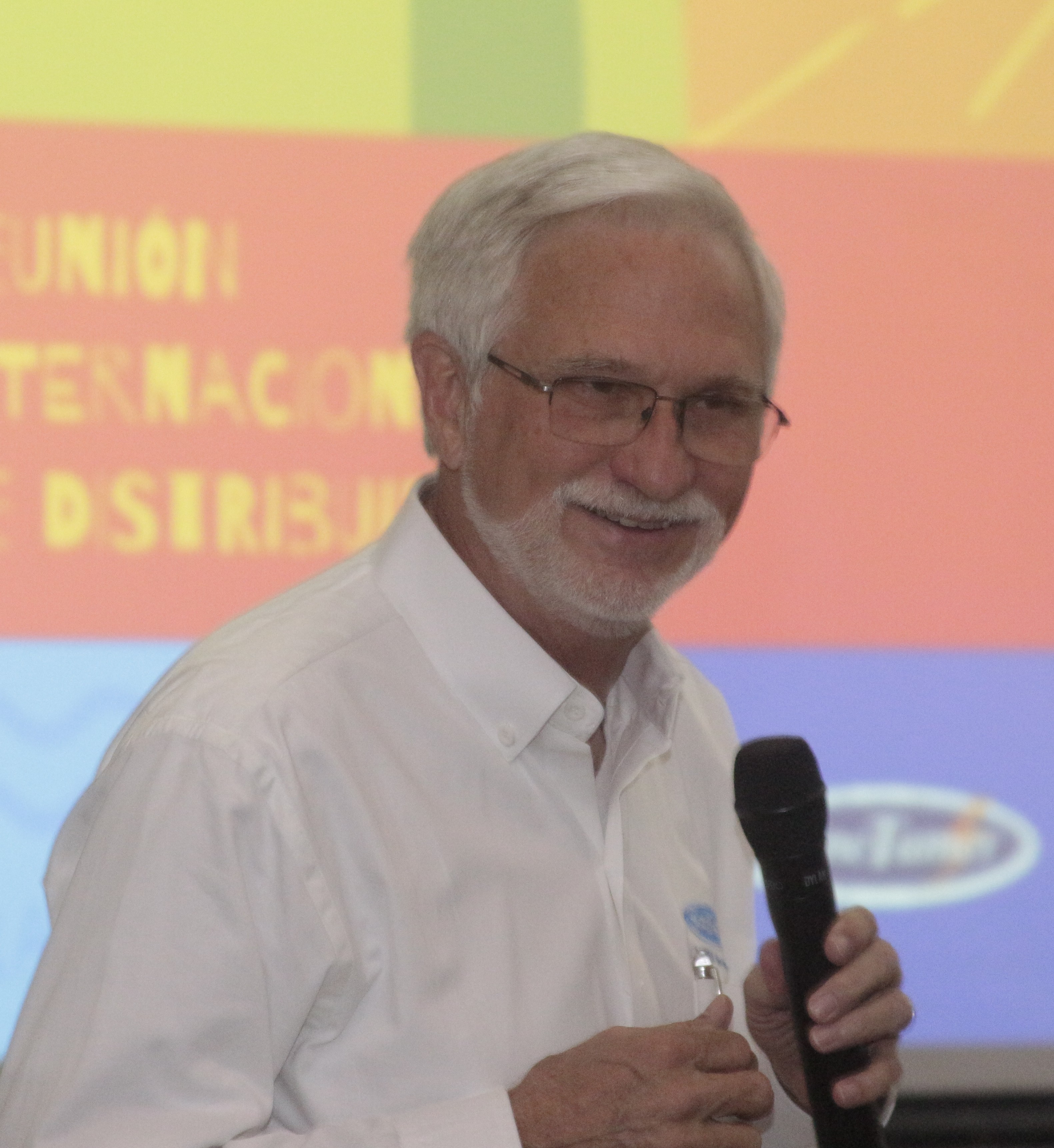
Article by
Jeff Edwards
Founder of ECS International Inc. Edwards travels and speaks extensively in Latin America, Asia and Africa on the subject of power quality; transients and mitigating their impact on profitability. After graduating from Texas Tech University in Lubbock Texas, Edwards spent 9 years in the Telecommunications sector prior to founding Energy Control Systems in 1987 as a Texas based corporation selling surge suppression and UPS systems. The company has evolved into a global power quality products and energy efficiency concern with operations spanning South America, Asia, Europe and Africa.
Disclaimer
Some of the above information may be the opinion of the author.