

What if an SPD is correctly selected, but its placement and connections still leave critical equipment exposed? Reliable protection depends on more than the device. Following spd installation best practices means planning around the equipment being protected, the electrical system, and locally adopted code, not simply finding space in a panel. Poorly routed connections or a lack of coordination with existing power-quality equipment can leave important risks unaddressed.
This guide explains how to plan an SPD’s location and connections, what a qualified installer should inspect and document, and how to verify device status and plan maintenance. You’ll also learn why local code requirements and existing equipment need to be considered together. Use the steps to ask focused questions about planning, installation, verification, and follow-up.
Key Takeaways
- Start with the equipment, electrical supply, site exposure, and operational risks before choosing an SPD.
- Apply spd installation best practices by following the device instructions and installation design for mounting and conductor routing.
- Ask the qualified installer to record the SPD’s location, installation date, findings, and commissioning checks.
- Include status-indicator checks in your maintenance plan, and follow model-specific guidance after a surge event or maintenance visit.
SPD installation planning: match protection to the site
Reliable protection starts with the electrical system, not just a device label. An SPD limits transient overvoltage where it is installed, helping reduce the voltage surge seen by connected equipment. For a foundational overview of how a surge protector works, consider whether its location aligns with the loads it is intended to protect. A device selected without that context may not address the site’s most important risks.
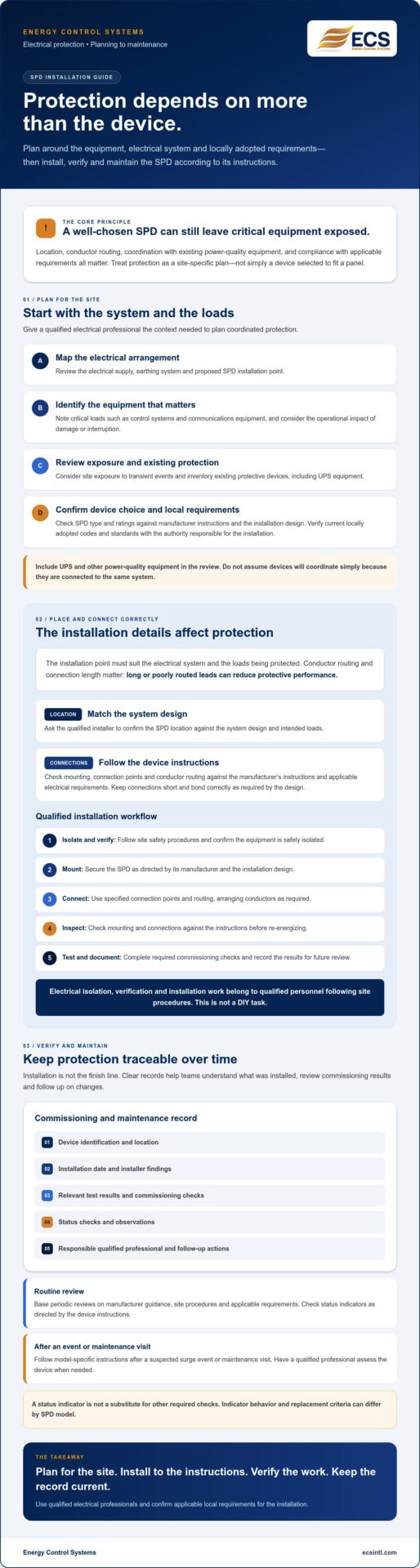
Before selecting equipment, map the electrical supply arrangement, earthing system, and proposed installation point. Identify critical loads such as control systems and communications equipment, and note what equipment damage or interruption would mean for operations. Review the site’s exposure to transient events and inventory existing protective devices, including UPS equipment. This information gives the qualified electrical professional a basis for planning coordinated protection rather than treating each device in isolation.
What should be checked before installing an SPD?
Ask a qualified electrical professional to assess the supply, earthing arrangement, protected loads, existing protective devices, and proposed SPD location. Then confirm the SPD type and ratings against the equipment manufacturer’s instructions and the installation design. If the site has a UPS or other power-quality equipment, include it in the review. Don’t assume devices will coordinate simply because they’re connected to the same system.
Separate sound planning principles from local requirements. Applicable electrical codes and standards can vary by jurisdiction and may change over time, so verify the currently adopted rules with the authority responsible for the installation. Check the exact scope and local applicability of any standard before relying on it. These spd installation best practices help define the protection objective and give the installer a clear basis for the work.
SPD installation best practices for placement and connections
Placement and wiring affect whether an SPD can protect the equipment identified in the plan. The installation point must suit the electrical system and intended loads. Conductor routing and connection length matter too: long or poorly routed leads can reduce protective performance. The NEMA guidance on correct SPD installation explains why keeping connections short and bonding correctly are important. Follow the exact device instructions and the site’s applicable electrical requirements.
How do placement and lead routing affect SPD installation?
Ask the qualified installer to confirm the SPD location against the system design. Have them check that mounting, conductor routing, and connection details match the manufacturer’s instructions. Safe isolation, verification, and all work on electrical equipment belong to qualified personnel following site procedures. Don’t treat this as a DIY task.
A clear workflow helps ensure key checks are not missed:
- Isolate and verify: Follow site safety procedures and confirm the equipment is safely isolated.
- Mount: Secure the SPD as directed by its manufacturer and the installation design.
- Connect: Use the specified connection points and routing, arranging conductors as required.
- Inspect: Check the mounting and connections against the instructions before re-energizing.
- Test and document: Complete the required commissioning checks and record the results for future review.
An SPD’s installation must follow its instructions and the site’s applicable electrical requirements. These spd installation best practices make the work traceable, not just complete. For product information to support selection discussions, review ECS surge protection options.
SPD commissioning and maintenance: verify protection after installation
Installation isn’t the finish line. A clear record helps your team confirm what was installed, understand commissioning results, and spot changes during later reviews. It also gives the responsible qualified professional useful context after a surge event or maintenance visit.
What should an SPD commissioning and maintenance record include?
Keep a record that identifies the device and its location, installation date, installer findings, relevant test results, status checks, and the responsible qualified professional. Record observations and follow-up actions too, so unresolved issues don’t disappear into routine paperwork.
As part of spd installation best practices, keep records accessible to the people responsible for equipment reliability. For background, see the guide What is a Surge Protective Device? The Industrial Leader’s Guide to Total Power Quality. Once site requirements and installation considerations are understood, the SineTamer LA Series may be one option to assess. Review its current specifications and instructions before making a selection. ECS supplies the series but does not perform SPD installation.
Make protection part of your reliability plan
Reliable surge protection starts with a site-specific plan, careful placement and connections, and commissioning records your team can revisit. These spd installation best practices help you ask informed questions, verify device status, and keep maintenance aligned with manufacturer guidance and local requirements.
Energy Control Systems supplies SineTamer surge protection devices and offers professional harmonic analysis. ECS can help you explore equipment and power-quality options, while installation should be handled by a qualified electrical professional.
Explore ECS surge protection and power-quality solutions to discuss equipment and power-quality options for your site. A clear process can bring greater confidence to the people and equipment that depend on reliable power.
Frequently Asked Questions
Does an SPD need to be installed by a qualified electrician?
For a hardwired SPD, use a qualified electrical professional to assess, install, and verify the device. The work involves the electrical system, safe isolation, and connections that must follow the manufacturer’s instructions and site requirements. During larger home renovations or custom builds, residential builders like Vancouver General Contractors partner with certified electricians to properly integrate panel protection and meet local building codes. Local rules determine who may perform the work, so confirm applicable qualifications and requirements with the relevant authority.
Where should a surge protective device be installed?
How often should an SPD be inspected or replaced?
Check the status indicator at intervals set by the manufacturer and your site procedures. Follow the device’s instructions after a suspected major surge or maintenance visit, since an SPD may need assessment or replacement. There’s no single replacement interval for every model; research guidance suggests replacement every 5 to 7 years in lightning-prone areas, but model-specific guidance should take priority.
Can an SPD be installed without checking the electrical system?

Article by
Jeff Edwards
Founder of ECS International Inc. Edwards travels and speaks extensively in Latin America, Asia and Africa on the subject of power quality; transients and mitigating their impact on profitability. After graduating from Texas Tech University in Lubbock Texas, Edwards spent 9 years in the Telecommunications sector prior to founding Energy Control Systems in 1987 as a Texas based corporation selling surge suppression and UPS systems. The company has evolved into a global power quality products and energy efficiency concern with operations spanning South America, Asia, Europe and Africa.
Disclaimer
Some of the above information may be the opinion of the author.